This year underscored the urgency of Friends of the Everglades’ work to protect the water, wildlife and wilderness that are vital to the future of Florida. Threats to the Greater Everglades ecosystem came in many forms — including rapidly intensifying hurricanes, overdevelopment, and even our own state government — and we were well-positioned to respond. That’s because of your support.
At Friends of the Everglades, we pride ourselves on being nimble and tough, just like our founder, Marjory Stoneman Douglas. Your donations directly power the legal legwork, advocacy, science and education that led to the following tangible impacts this year. We’re proud to present them to you in this report.

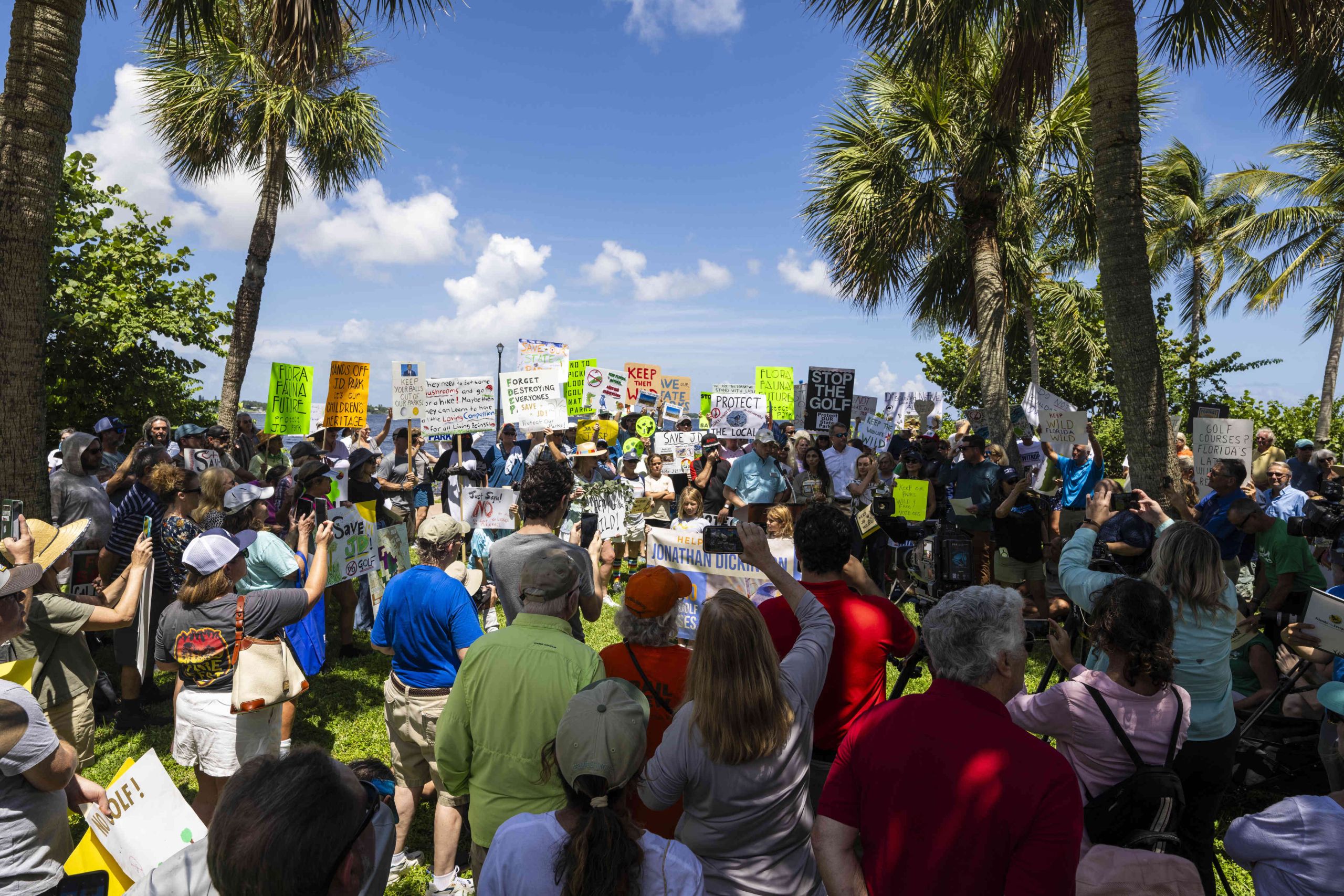
State park supporters turned out in force at a protest and press conference calling for an end to the so-called “Great Outdoors Initiative” at Flagler Park in Stuart on August 27, 2024.
Helped stop the State Parks sneak attack: When Florida’s state parks came under threat from a plan to bring harmful development projects to nine parks across the state, Friends of the Everglades and allies led the public in swift opposition. After eight days of unified public outcry, Gov. Ron DeSantis announced on August 28 the state would not move forward with these plans “this year,” though future attempts remain possible. Friends of the Everglades played a key role in mobilizing grassroots support across the state, putting concerned citizens in contact with DeSantis and other policymakers and helping to coordinate in-person rallies. The victory proved the power of collective action in protecting Florida’s natural lands. We and our partners remain vigilant and stand ready to defend all state parks from future threats.
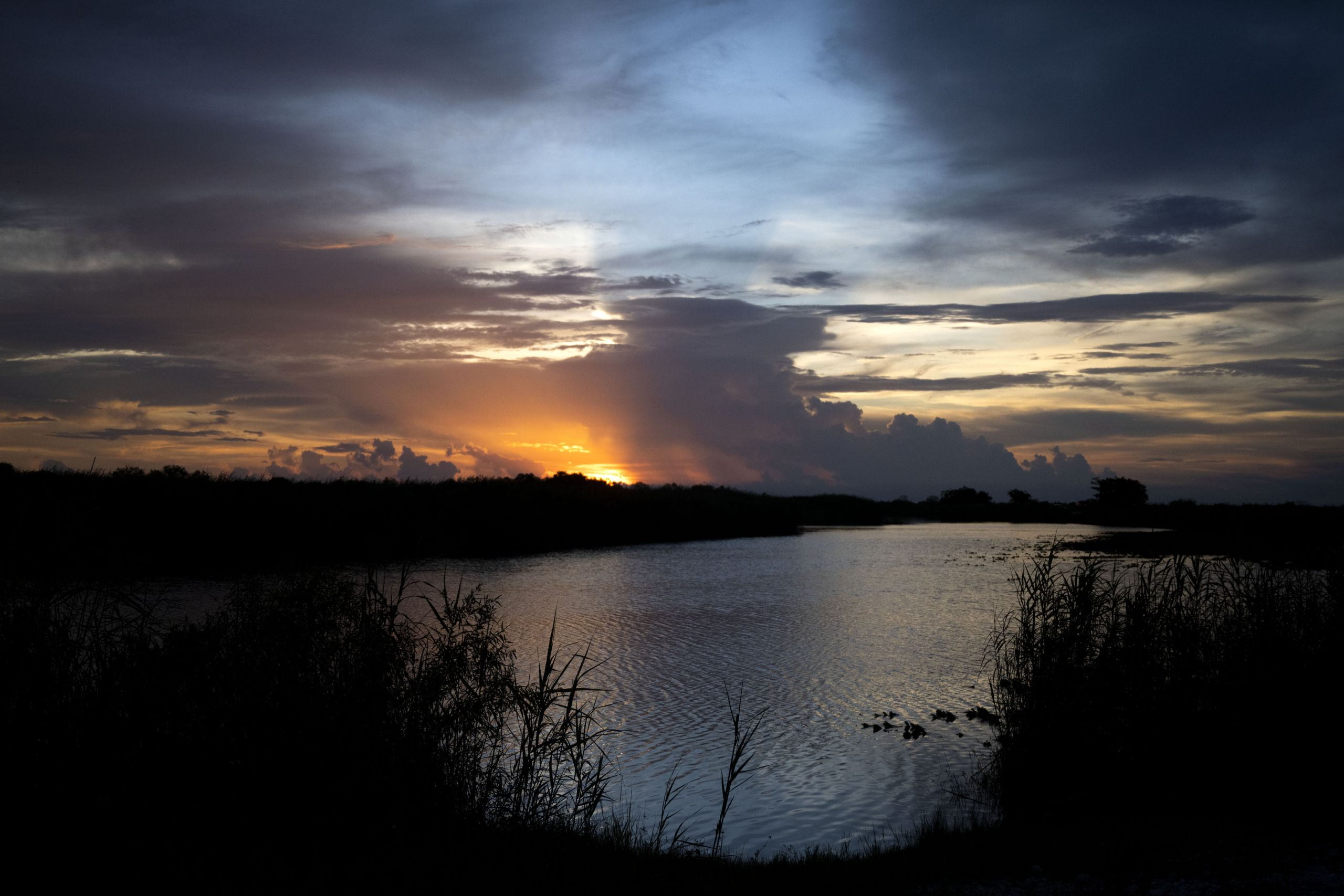
The sun sets over the Loxahatchee National Wildlife Refuge in Parkland on August 9, 2024.
Maggy Hurchalla Opportunity Fund deployed to fight rock mine: Friends of the Everglades is proud to continue the conservation efforts championed by the late environmentalist Maggy Hurchalla through our Maggy Hurchalla Opportunity Fund. This donor-supported pool underwrites advocacy for the preservation of sensible growth policies and ensures our ability to respond quickly to threats across the Greater Everglades. One such threat in 2024 was Big Sugar’s proposal to create an 8,000-acre rock mine south of Lake Okeechobee, under the guise of a “water resources” project. We deployed Maggy’s Fund to enlist the expertise of environmental attorney Richard Grosso and join forces with other groups fighting the concerning rock mine plan. In 2024, the Maggy’s Fund surpassed $110,000, providing horsepower to this critical legal research and advocacy.
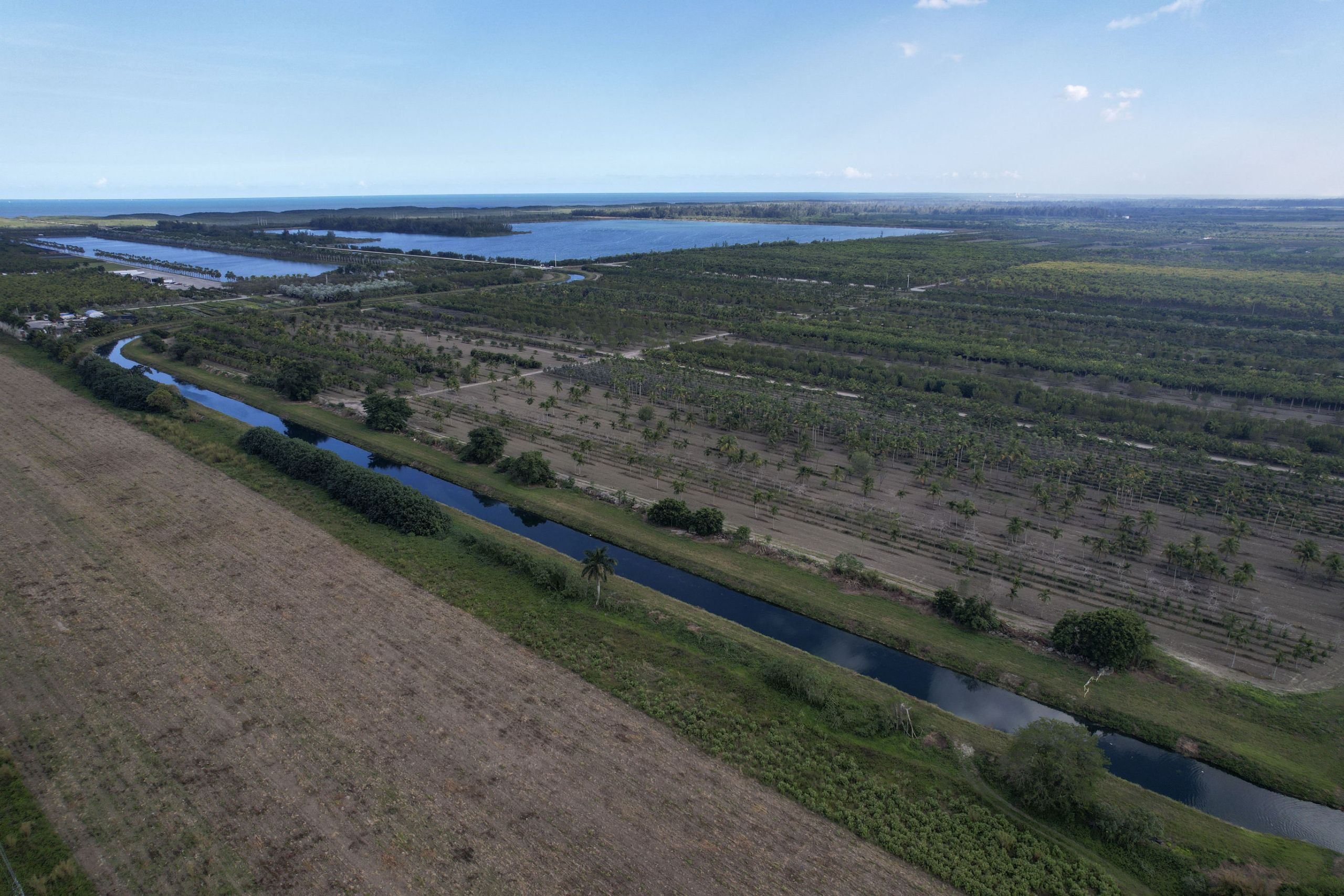
Plans to add a warehouse complex on flood-prone property along Biscayne Bay in Miami-Dade County were halted by a court ruling.
Blocked development in harm’s way: Back-to-back hurricanes Helene and Milton delivered a harsh reminder of our vulnerability to flooding, coastal erosion and rapidly intensifying storms — and the value of our work to combat irresponsible development in low-lying areas. We scored a win on that front in March — working with allies including Everglades Law Center — when a court ruling halted a 350-acre warehouse complex proposed for farmland in a flood-prone area near Biscayne Bay. Climate change is here, and it poses an existential threat to the Greater Everglades and the water supply for millions of people in South Florida. We will fight for sound growth-management decisions to safeguard our future.

The A-2, or EAA Reservoir, STA, is set to be primarily used to treat polluted runoff from sugarcane fields, instead of Lake Okeechobee water.
Pushed for a functional EAA Reservoir project: Water quality has always been at the heart of Friends of the Everglades’ work. That’s why we had serious concerns about the Army Corps of Engineers’ proposed use of the A-2 Stormwater Treatment Area, part of the $4 billion EAA Reservoir project. Initially promised as a solution to reduce harmful discharges from Lake Okeechobee to the northern estuaries, the STA is now proposed to treat runoff primarily from sugarcane fields. This shift contradicts the project’s original goals and threatens to turn this manmade marsh into yet another taxpayer-funded mechanism for cleaning up Big Sugar’s pollution. Friends of the Everglades’ scientists analyzed the project and sent a letter to the Corps and South Florida Water Management District calling on them to to ensure the A-2 STA fulfills its intended purpose of restoring clean water flows to the Everglades and relieving the northern estuaries from toxic discharges. Too much is at stake to settle for less.

Cyanobacteria with the toxin microcystin builds up around the gates of Port Mayaca in Martin County on July 9, 2024.
New, improved Lake Okeechobee plan adopted: The Lake Okeechobee System Operating Manual (LOSOM) was officially activated in August, marking a significant milestone after more than five years of planning and public advocacy championed by Friends of the Everglades. This new management plan, set to guide lake operations for the next decade, incorporates crucial changes. The Army Corps of Engineers will now consider the human health risks of toxic algae on downstream communities and prioritize sending water south to the Everglades. We are watching implementation closely. While LOSOM is expected to reduce the harmful discharges that have plagued the St. Lucie and Caloosahatchee estuaries and Lake Worth Lagoon, the plan still allows for some discharges when the lake exceeds high levels. Friends of the Everglades was at the forefront of LOSOM advocacy for a half-decade and continues to push for long-term, sustainable solutions to protect both the Everglades and surrounding estuaries.
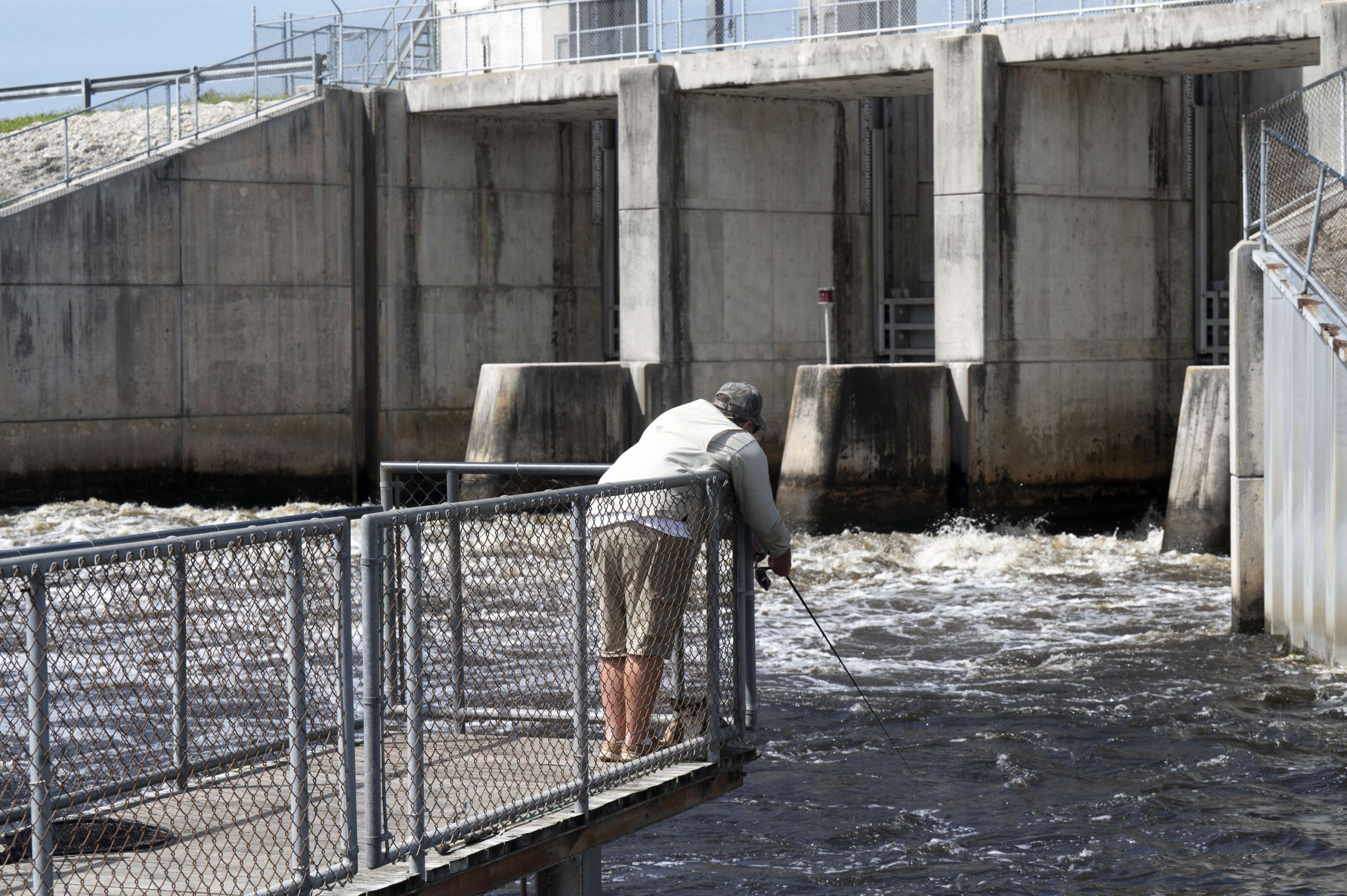
A man fishes the Caloosahatchee Canal as Lake Okeechobee discharges flow through the Julian Keen, Jr. Lock and Dam in Moore Haven on March 25, 2024.
Legal petition to EPA for action on toxic algae: In May, Friends of the Everglades joined the Center for Biological Diversity and other allies in submitting a legal petition formally requesting that the U.S. Environmental Protection Agency establish new, enforceable standards for cyanotoxins under the Clean Water Act. Cyanotoxins from blue-green algae pose serious risks to public health, with links to liver disease, ALS, and Alzheimer’s, among other health concerns. Florida’s current efforts to monitor harmful algal blooms and issue public alerts have been inadequate, which is why Friends of the Everglades stepped up. This legal petition urges the EPA to take stronger action where the state has fallen short.
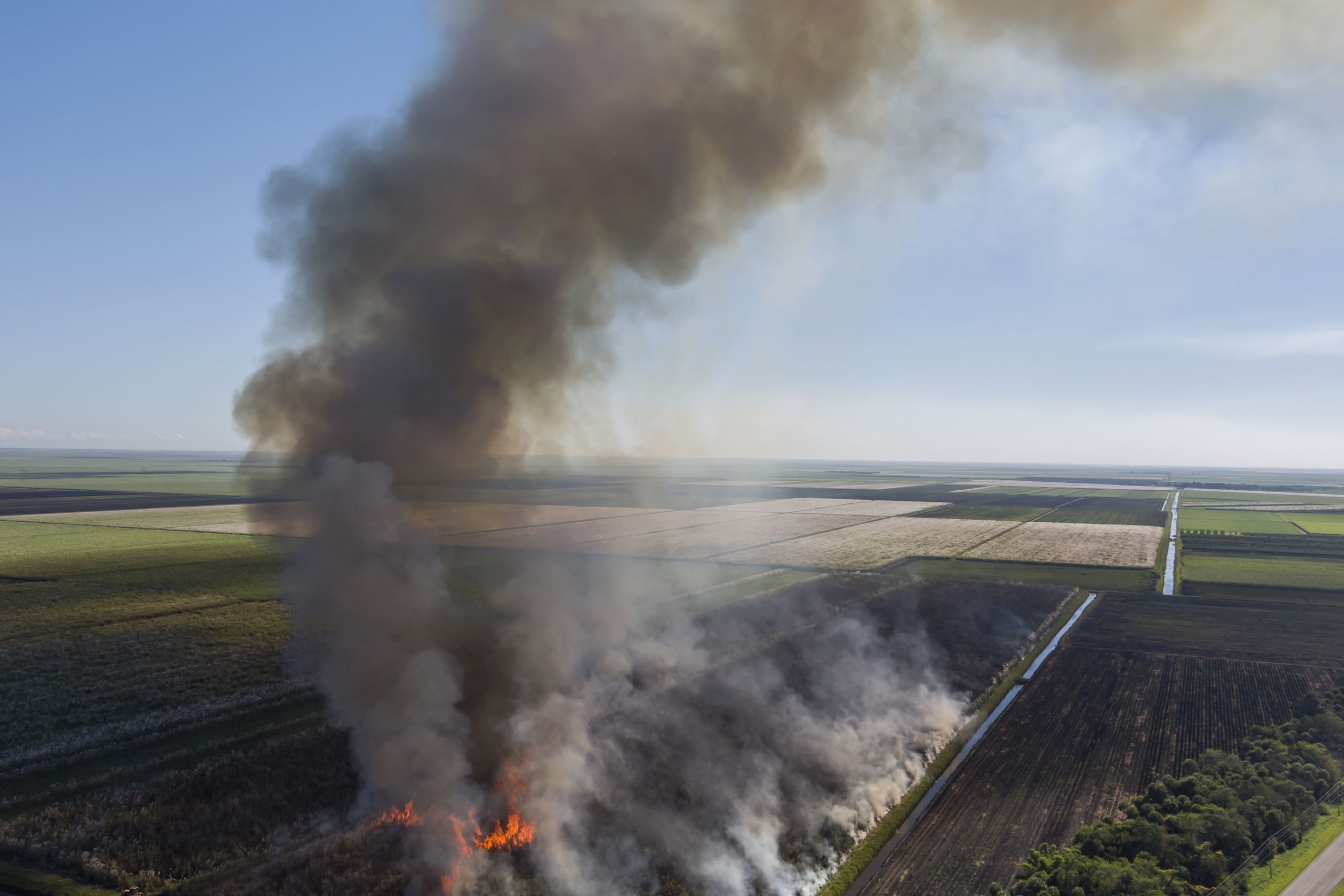
A sugarcane field near Canal Point is burned as a pre-harvest technique on December 23, 2021.
Sugarcane burning health threat revealed: Friends of the Everglades provided funding for a new, independent study by Dr. Michée Lachaud, an environmental economist at Florida A&M University, that confirms the harmful health effects of pre-harvest sugarcane burning on neighborhoods around the Everglades Agricultural Area. The research reveals a 10.8% increase in physician-diagnosed asthma cases for people living near cane burning — particularly affecting children 13 and younger, with low-income communities suffering the most. This statistically significant finding emphasized the urgency of stopping Big Sugar’s air pollution at a pivotal moment, as sugar protections in the federal Farm Bill are renegotiated. Nearly 10,000 supporters have joined us in calling on Congress to remove the sugar industry protections in the U.S. Farm Bill by signing our Sugar Reform Now petition.
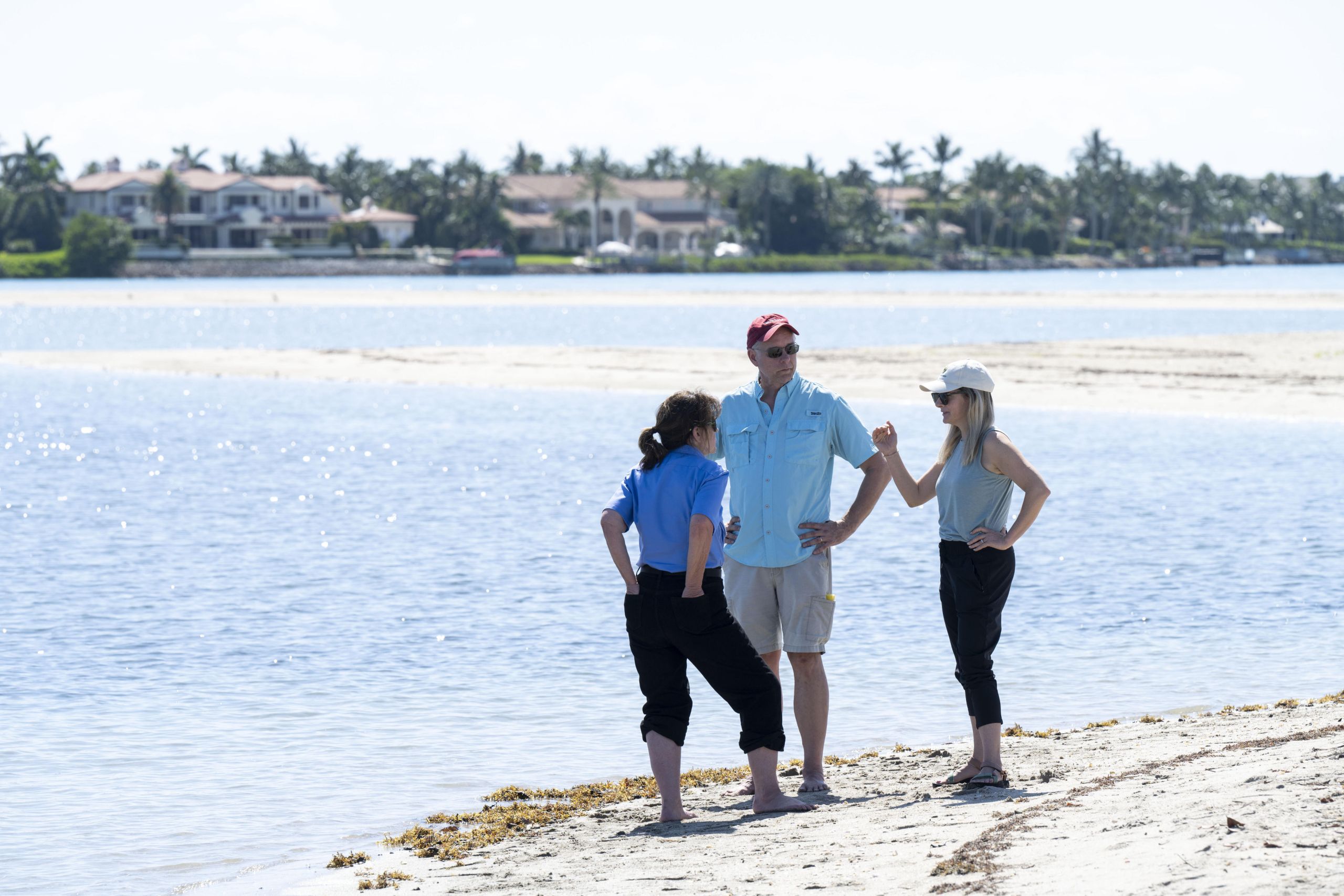
South Florida Water Management District governing board member Cheryl Meads learns about Friends of the Everglades’ water policy positions with Executive Director Eve Samples and Policy Director Gil Smart on the Indian River Lagoon on May 24, 2024.
Lake Okeechobee discharges halted: On February 17, after a rainy fall and winter, water managers opened the floodgates from Lake Okeechobee to the northern estuaries — allowing billions of gallons of polluted water to flow, untreated, into the fragile Caloosahatchee and St. Lucie rivers and the Lake Worth Lagoon. Friends of the Everglades responded swiftly and loudly, calling for an end to harmful discharges — and the Army Corps complied in late March. Recognizing this as a temporary victory, we also waged a longer-term campaign to fix the rigged system that favors Big Sugar’s irrigation and drainage over the health of the Everglades and northern estuaries. More than a thousand Friends of the Everglades supporters sent messages to the South Florida Water Management District, demanding an end to toxic Lake O discharges and more capacity to clean lake water in the existing taxpayer-funded stormwater treatment areas. The effort forced public discussion by water managers and raised awareness about the huge burden of runoff from industrial sugarcane fields in the EAA, which accounts for about 90% of STA water capacity in a typical year.
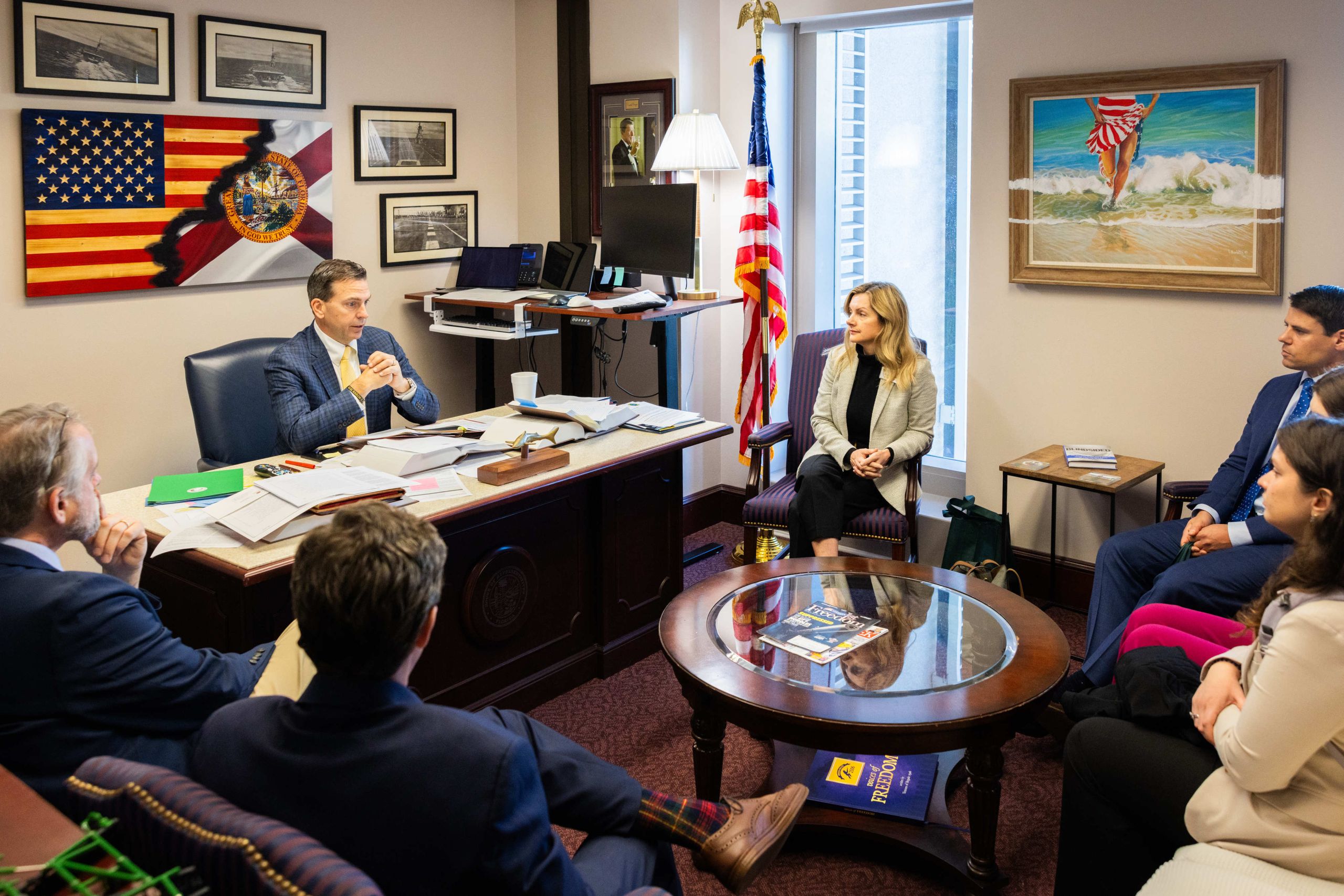
Friends of the Everglades Executive Director Eve Samples and Policy Director Gil Smart meet with Florida Rep. Toby Overdorf in Tallahassee on Feb. 7, 2024.
Growing influence for Legislative Accountability in Tallahassee: During Florida’s 2024 legislative session, Friends of the Everglades played a crucial role in holding lawmakers accountable and defeating harmful bills proposed in Tallahassee. We worked with allies to: stop a dangerous bill that would have eroded local governments’ power to protect wetlands; strip harmful language from legislation that would have saddled citizens with legal fees for losing environmental challenges; and prevent a last-minute attack on urban fertilizer ordinances. Throughout the session, Friends of the Everglades hosted three livestream conversations to keep the public informed and engaged about what was afoot in the Capitol. Our grassroots advocacy proved effective, showing public pressure can yield tangible victories in defense of Florida’s environment. We received our third consecutive year of grant funding from The Tierney and Wetzel Foundation for Legislative Accountability work, strengthening our influence and expertise in the face of polluter lobbying.
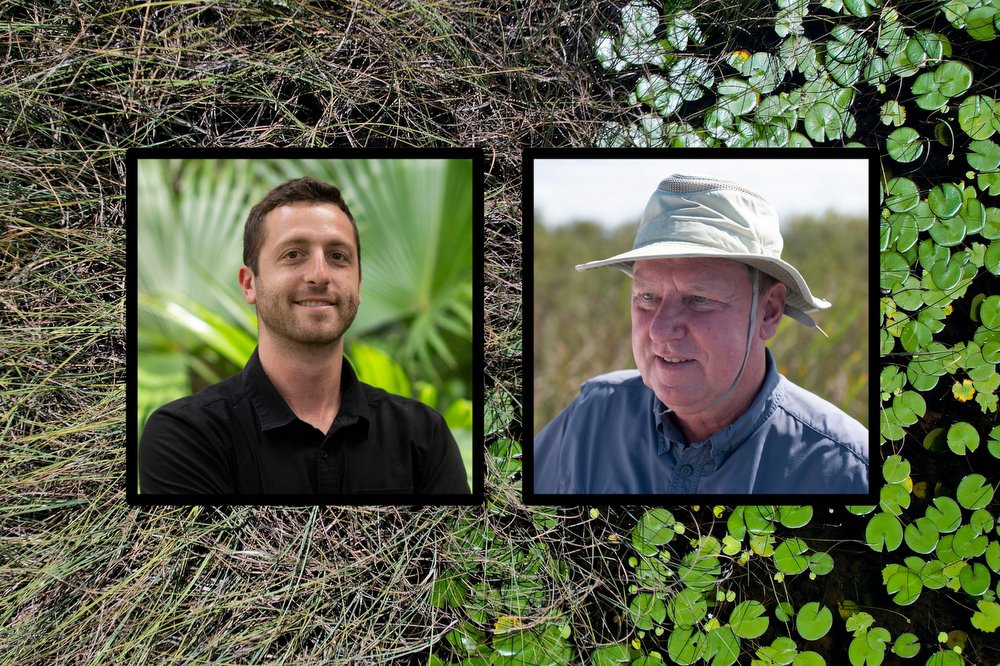
Friends of the Everglades science experts Mitchell Latzman (left), Policy & Science Analyst, and Dr. Thomas Van Lent, Senior Scientist.
Expanded science capacity: Friends of the Everglades grew its scientific expertise in 2024, with the addition of a new, full-time Science & Policy Analyst. This important role, filled by Mitchell Latzman, will allow us to provide independent scientific analyses that are vital to the future of Everglades restoration. Our new scientist is working hand-in-hand with Dr. Thomas Van Lent, our Senior Scientist and one of the world’s leading experts on Everglades hydrology to ensure restoration projects are effective.
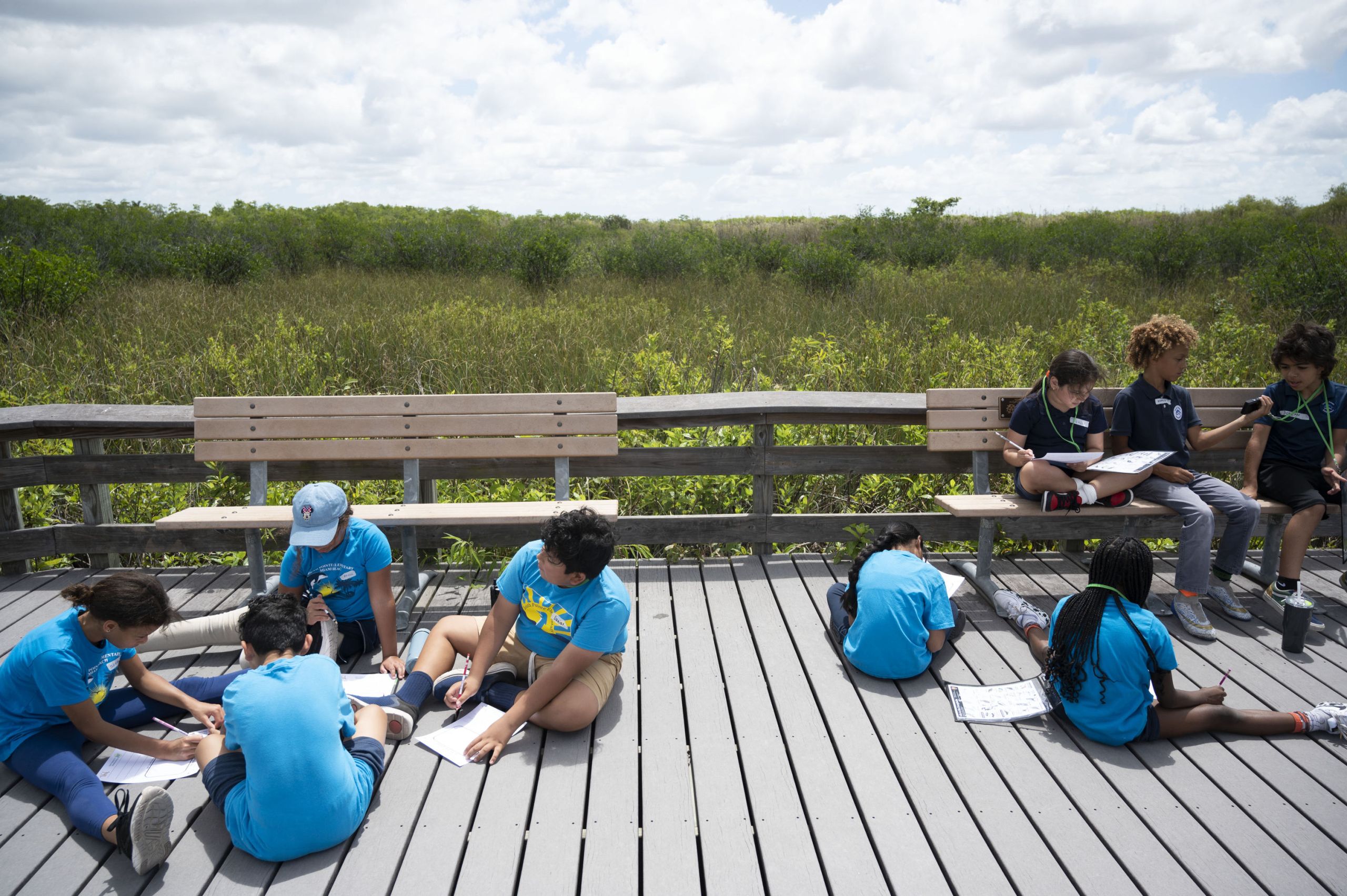
Fourth grade students from South Pointe Elementary School explore Anhinga Trail through the Young Friends of the Everglades youth education program on April 26, 2024, in Everglades National Park. The field trip was funded in whole or in part by a grant from the City of Miami Beach.
Young Friends of the Everglades excites and inspires: With the introduction of our first season of summer programming, Young Friends of the Everglades inspired new students and communities about the wonders of the River of Grass. Our one-of-a-kind youth education program also reached 32 new classrooms and more than 700 students in the 2023-2024 school year. Young Friends celebrated an especially exciting achievement in the late spring, when Education and Outreach Director Amanda Purnell guided 50 fourth graders from Miami Beach on the first Young Friends-led field trip to Everglades National Park. Along the Anhinga and Gumbo Limbo trails, students took water samples, identified plant and animal species, explored human water use, and estimated alligator lengths. In fall 2024, the Young Friends program enlisted an experienced Miami-based educator to expand our impact.